
Understanding the Importance of Bar Council Approval for Law Degrees
Home / LAW / Understanding the Importance of Bar Council Approval for Law Degrees
Approval of the Bar Council of India (BCI) has become mandatory for law degrees to make sure of legitimacy that empowers graduates to enroll as advocates. Individuals graduating from BCI-approved, affiliated centers of legal education are only eligible for enrolling as advocates with state bar councils. Colleges are inspected through the BCI, which makes sure that they adhere to legal educational standards. An institute approved by BCI has become requisite for litigation, judicial services, and corporate law. Without BCI approval, graduates cannot take the All-India Bar Examination (AIBE) required for a Certificate of Practice.
Academic Standards and Curriculum Guidelines Set by the Bar Council of India
Legal education rules are set by BCI, which enforces strict standards for recognized law degrees provided by top law schools in Delhi such as Geeta Institute of Law (GIL). GIL adheres strictly to the rules set by BCI, offering 5-year integrated courses and a 3-year LLB program. The institute adheres to the following key rules set by BCI:
- A minimum of 45% qualifying marks is required to get through a BCI-approved institute and 40% marks for SC/ST category
- The course structure should be segregated into 3-year LLB course and 5-year integrated program
- Core subjects should include criminal law, constitutional law, evidence, environmental law, civil procedure, and professional ethics.
- BCI has also made it obligatory to include moot courts and mock trials.
- A minimum of 75% is required for attendance in classes and seminars
- Law colleges must have adequate library, moot court halls and infrastructure
Importance of Choosing BCI-Approved Law Schools in Delhi
Since Delhi is regarded as a legal hub of the country, selecting a BCI-approved law school is crucial for any aspiring lawyer. The individuals will not only be eligible to practice in Delhi but also all over India as well. However, Delhi is always a great choice for aspirants due to its nearness to the Supreme Court, High Court, and several other moot courts. BCI approval makes sure that the law schools meet minimum standards for curriculum and faculty qualifications as well as infrastructure. The unmatched access to legal professionals and tribunals in Delhi has made the location a top favorite for those looking forward to gathering practical exposure besides academic knowledge.
How BCI Approval Ensures Professional Eligibility for Law Graduates
The approval from BCI is the foundational necessity that is required for every law graduate in India. It makes sure that every individual is professionally eligible by authenticating that the degree acquired meets the particular high-quality requirements. A BCI-approved degree is the criterion for a graduate to enroll as an advocate with any state bar council. Every graduate is required to pass the AIBE category to secure the Certificate of Practice in order to start their qualification professionally.
Law Program from Geeta Institute of Law (GIL)
GIL is regarded as a pioneer of legal education that is provided with high quality, reinforcing the position as a reputed law school in Delhi NCR. Being among the top law schools in Delhi, GIL is committed to shaping legal superiority among aspiring students. It has been affiliated with NAAC A++ and has been approved by the Bar Council of India. Looking forward to providing a dynamic curriculum, the institute has been tailored to foster legal leaders.
Faculty Qualifications and Academic Infrastructure in GIL
At GIL, the faculty members are highly qualified and are also dedicated to the academic in-depth knowledge of the students. The major aspect that distinguishes GIL from other law schools includes the quality of their faculty and the robustness of their academic infrastructure. The institute is supported by a team of competent academicians and legal specialists who bring both theoretical knowledge and practical legal experience to the classroom. This makes GIL stand out among the top law schools in Delhi, along with well-equipped classrooms and a dedicated library with law-related resources.
Career Opportunities After Graduating from BCI-Approved Law Schools in Delhi
After completing legal studies at a BCI-approved law school in Delhi, the list of diverse career paths is as follows:
Corporate Lawyer: Responsible for dealing with transactions and legal frameworks in a business to secure the interest of the company.
Litigation lawyer: A litigation lawyer is accountable for representing clients in criminal disputes and dealing with the entire legal procedure from investigations.
Judicial Services: In India, judicial services are primarily required for graduates proposing to become judges in subordinate courts.
Government Jobs: Top government jobs for law graduates in India include Judicial Services, Judge Advocate General (JAG) for the armed forces, public prosecutor, and legal officer in PSUs.
In-House Counsel: They work directly for businesses and are responsible for dealing with legal risks and compliance.
Academics: An individual can become a law professor or legal advisor after completing their degree in legal studies.
After graduating from top BCI-approved law schools in Delhi, an individual can pursue their dream in any of the fields that are mentioned above.
Conclusion
It could be concluded that BCI approval is crucial for completing a successful legal career, as it indicates a recognized law degree. It not only adheres to professional standards but also ensures eligibility in practice. Only BCI-approved institutions provide degrees recognized for enrollment as an advocate. A code of conduct is prescribed by BCI along with professional ethics that are critical for maintaining the reputation of legal experts. It also sets standards for education and faculty qualifications.
Related Blogs

Corporate Lawyers: Strategic Legal Counselors for Every Business Milestone
The job role of corporate lawyers is to advise businesses on legal rights and obligations…

Delhi APP Vacancy 2026: Check Notification, Eligibility & Syllabus
Delhi APP Vacancy 2026 enables lawyers to become an Assistant Public Prosecutor within the Directorate…
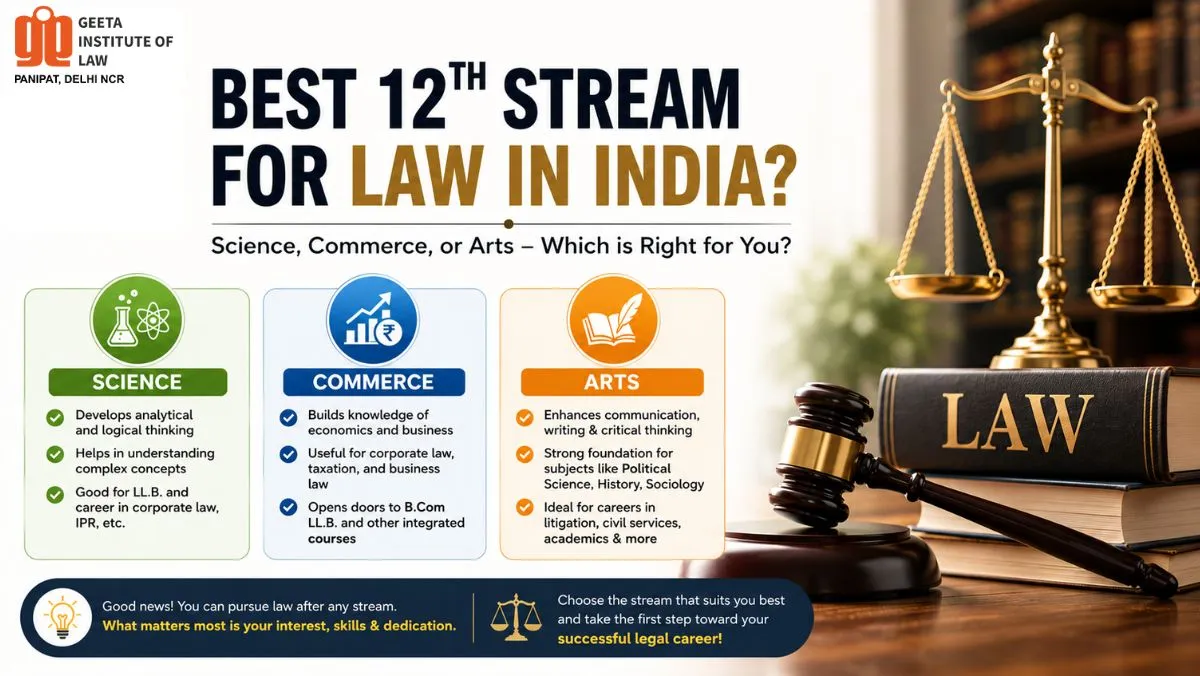
Which 12th Stream is Best for Law in India?:Science, Commerce or Arts
Many students interested in law studies after 12th wonder whether Science, Commerce, or Arts is…

CBSE 12th Result 2026 Declared! Check Your Scorecard Right Now
The CBSE Class 12 Result 2026 has been officially announced on 13th May 2026. Students…
University of Law Explained: UK’s University of Law vs Studying Law in India — Cost, Recognition & ROI
If you have searched for University of Law, you have likely come across the well-known UK…

What Do Lawyers Actually Do? Exploring the Different Career Paths in Law
The legal market today covers far more than courtroom advocacy. Lawyers have roles across business,…