
What is Criminal Law in India: Admission 2026, Entrance Exams, Courses, Best Colleges, Career Options India & Abroad
Home / LAW / What is Criminal Law in India: Admission 2026, Entrance Exams, Courses, Best Colleges, Career Options India & Abroad
Criminal Law is one of the best law specialization in India that deals with offences committed against the public, the state, or society. It outlines certain behaviours that are considered unlawful and imposes sanctions on them. In criminal trials, the person accused of the crime is the defendant, and the government is the plaintiff. Protecting society from damage and punishing those who break the law are the main goals of this law.
Criminal Law in India is concerned with punishing those who commit crimes, including theft, assault, murder, cybercrimes, fraud, and economic offences, as opposed to civil law, which handles conflicts between people or organisations.
This blog is an in-depth description of the Criminal Law course, its curriculum, scope, expected pay, and benefits.
Admission Process & Eligibility Criteria for Criminal Law
The admission process to pursue Criminal Law in India is straightforward. It is based on objective criteria and merit by individual institutes. However, most institutions follows similar approach, which requires:
- Register through the official portal.
- Complete application forms with academic/personal information.
- Upload required documentation and pay application fees.
- Take your entrance exams on the scheduled testing date.
- Check the merit list and the counselling notification.
- Attend counselling and select preferred institutions.
- Verify and validate the required documents, and make the prescribed fee payment to confirm Admission.
Eligibility Criteria for Criminal Law in India
| Course | Eligibility | Entrance Exams |
| LLB-3 year /5 Year Integrated-UG Level | Completion of 10+2 or equivalent from a recognised board with minimum 45–50% marks | CLAT, LSAT, or university-specific entrance exams |
| PG Level (LLM in Criminal Law) | Bachelor of Laws (LLB) degree from a recognised institution | CLAT PG, AILET, or university-level entrance exams |
| Diploma Courses | 10+2 or Bachelor’s degree, depending on course level | Usually merit-based; some institutes may conduct internal tests |
| Certificate Courses | 10+2 pass or graduate degree (varies by institution) | Generally, no entrance exam; open to eligible applicants |
Top Criminal Law Entrance Exams 2026
Although some institutions sometimes use merit-based selection, entrance-based admission is the main method used for admission to programs in Criminal Law. Common Criminal Law entrance exams in India:
- Common Law Admission Test-Undergraduate, or CLAT UG
- Central Universities Common Entrance Exam, or CUCET
- Symbiosis Law School All India Admission Test, or SLS AIAT
- The UPSE Law Studies Aptitude Test, or ULSAT
Types of Criminal Law Courses (UG, PG & Diploma)
Criminal Law in India provides multiple courses at undergraduate, postgraduate, and diploma levels, allowing students to choose based on their academic background and career goals.
- At the UG level, students can pursue a 3-year LL.B. after graduation or a 5-year integrated course like B.A. LL.B. or B.B.A. LL.B. after Class 12. This law in India is a core subject covering IPC, CrPC, and evidence law.
- At the PG level, an LL.M. in Criminal Law offers specialization in areas like criminal justice, forensic science, and cybercrime.
- Diploma courses are short-term programs focused on practical aspects such as criminology, victimology, or forensic studies, ideal for skill enhancement.
Criminal Law Syllabus & Curriculum Structure
The syllabus for Criminal Law in India is structured to develop a solid theoretical basis and practical comprehension of the criminal justice system and crime. The main areas of study are Comparative Criminal Procedure, Law and Social Transformation in India and Indian Constitutional Law: The New Challenges. Other subjects studied by students include Privileged Class Deviance, Judicial Process, Criminal Justice, Human rights and Drug Addiction.
The more advanced topics, like the Collective Violence and Juvenile Delinquency, aid in the analysis of contemporary criminal problems. Legal Education and Research Methodology is also another priority in the program. It is topped off with an elaborate dissertation and viva-voce, where students are able to showcase research skills and knowledge of the subject.
Best Criminal Law Colleges in India (Government & Private)
India is home to several prestigious universities that provide specialised instruction in Criminal Law. Among the best law colleges are:
- Delhi’s National Law University (NLU)
- Geeta Institute of Law, Panipat
- Hyderabad’s NALSAR University of Law
- Kolkata’s National University of Juridical Sciences (NUJS) in West Bengal
- Bhubaneswar’s SOA University
- Bangalore’s National Law School of India University
- Delhi’s National Law University
- Pune’s Symbiosis Law School
- Gandhinagar’s Gujarat National Law University
- Jindal Global Law School (JGLS), Sonipat
- Institute of Law, Nirma University, Ahmedabad
- ICFAI Law School, Hyderabad
- School of Law, SASTRA University, Thanjavur
- Lloyd Law College, Greater Noida
- KIIT School of Law, Bhubaneswar
Also Read: Private vs Government Law Colleges in India: Which Is Better?
Career Scope, Salary & Top Recruiters in India
Studying Criminal Law in India is more than just something you do for college; it can lead to a job in law, public service, or legal defence. It gives law students, people who want to become lawyers, and lawyers the legal background they need to deal with all kinds of crime and make a real difference in the legal system. Let us discuss its career scope, salary and top recruiters:
Career Scope
When it comes to careers, Criminal Law has a lot of options, both in courtrooms and outside of them:
- Criminal Defence Attorney: This job role includes protecting people who are suspected of crimes and ensuring their civil rights are respected during court processes.
- Public Prosecutor: To represent the government in criminal cases, providing proof against the accused and making sure that the trial is fair.
- Legal Advisor: A person who works for businesses or the government to make sure they follow Criminal Law and give advice on legal danger.
- Legal Researcher: It includes studies on case law, legal decisions, and statutory readings to help lawyers and law firms with their analysis.
- Victim Advocate: The one who helps crime victims understand the court system and get help while the case is going on. The main motive is to fight for the needy.
Salary Structure
| Particulars | Details |
| Course Fees (Annual Range) | INR 10,000 to INR 5 LPA |
| Entry-Level Salary | INR 3–5 LPA |
| Mid-Level Salary | INR 5–8 LPA |
Top Recruiters
Some of the best law companies and organisations that hire Criminal Law grads are:
- Trilegal India
- Ahlawat and Associates
- Khaitan and Co.
- The Sagar Associates
Opportunities are available not just in law firms but also in government agencies, business legal departments, human rights organisations, non-governmental organisations, judicial services, and legal journalism.
Career Opportunities Abroad
The degree in Criminal Law in India provides good career opportunities, particularly in the areas of public prosecutor, legal advisor and defence. Law firms, multinational companies and international organisations allow graduates to work as legal consultants, compliance officers, human rights advocates or policy researchers.
Higher education programs are also undertaken by many professionals outside the country in an attempt to practice abroad. Opportunities are available with NGOs, international courts, and entities such as the United Nations. Lawyers have a chance to work in foreign nations and to have successful global careers if they have other licenses or bar regulations in the country where they are going to work.
Frequently Asked Questions
The prices for courses of Criminal Law in India differ depending on the college and the degree program. Government colleges will cost between INR 20,000 and 1 lakh per year, and the college of LL.M. and the diploma can cost from INR 1 lakh to 4 lakh per year.
Some of the core subjects are the Indian Penal Code (IPC), Criminal Procedure Code (CrPC), Law of Evidence, Criminology, Juvenile Justice, Human Rights and Cybercrime. Other advanced courses can be forensic science and victimology.
The process of admission in Criminal Law in India is usually entrance-based exams, such as CLAT, AILET, or university-based exams. Applicants have to meet the eligibility requirements, meet the rigid deadlines, undergo thorough document checks, and they have to pay the registration fees within the given time.
Related Blogs

Masters of Law Programs in India: The Complete 2026 Guide to the LLM Law Degree
Masters of law programs in India are postgraduate LLM (Master of Laws) degrees that you…

Who Owns AI-Generated Content? A Simple Look at Copyright Law
TABLE OF CONTENTS Introduction Why Is AI Content Ownership Confusing? AI vs Human Creativity How…
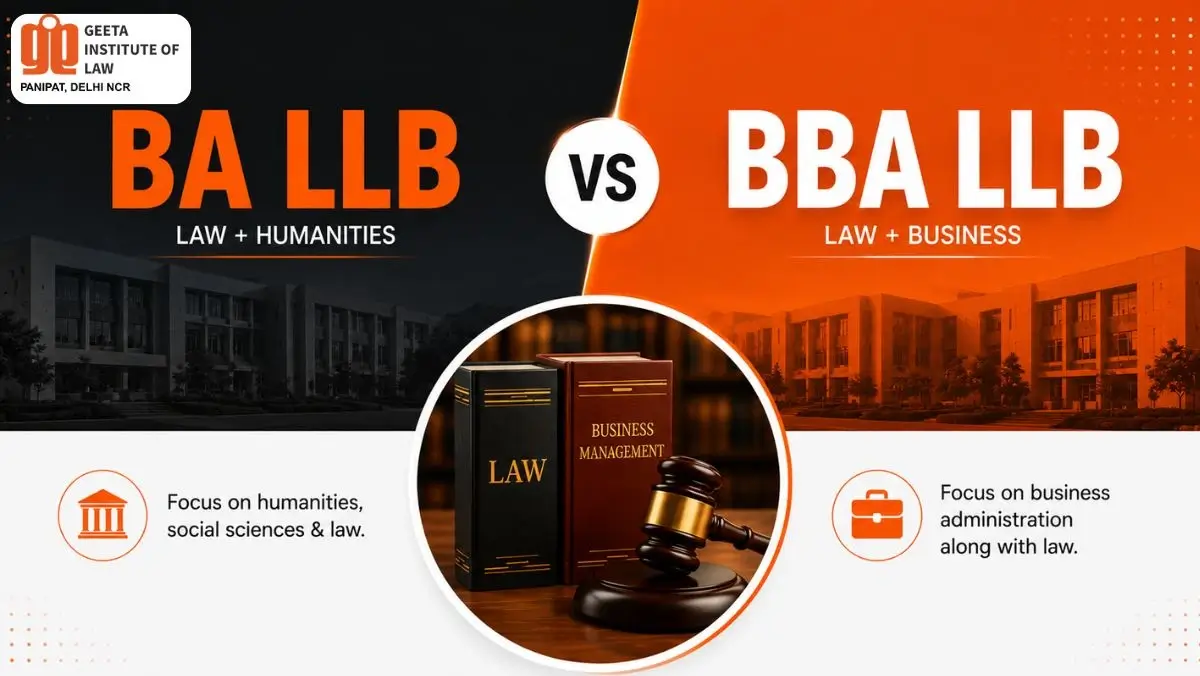
BA LLB vs BBA LLB: Which Course is Right for You After 12th?
Many students who want to make a career in law have two choices and are…
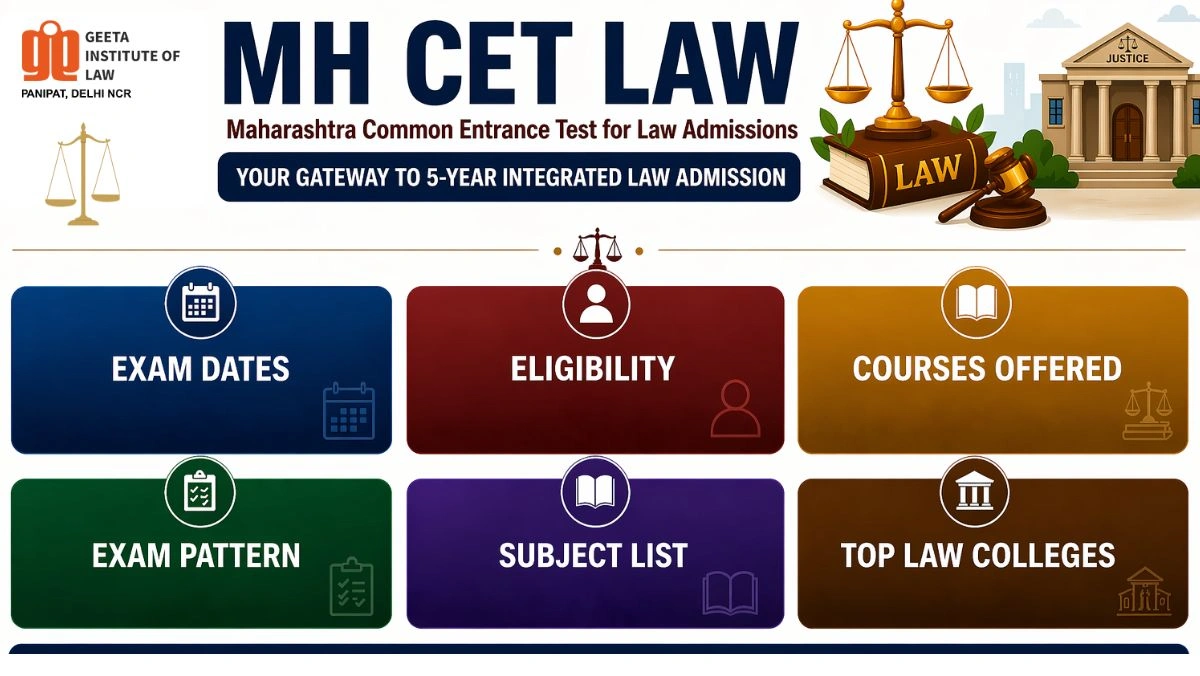
MH CET Law 2026: Syllabus, Exam Date, Eligibility & Top Maharashtra Colleges
The MH CET Law 2026 has been officially announced — the MH CET Law exam…
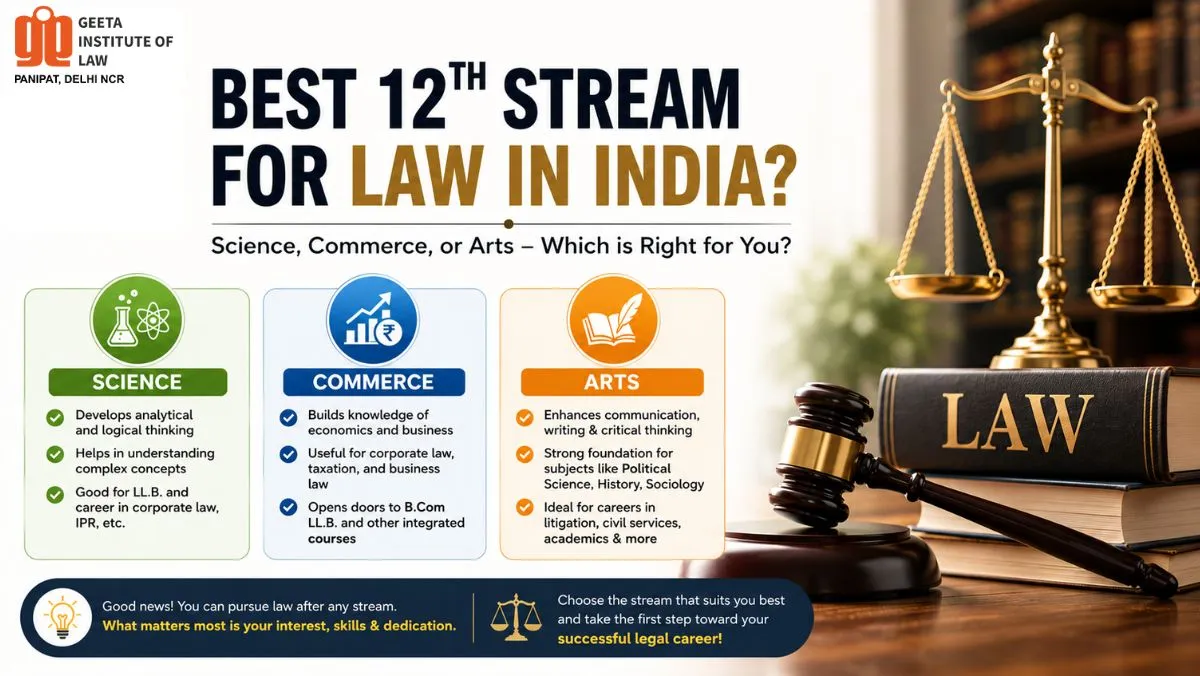
Which 12th Stream is Best for Law in India?:Science, Commerce or Arts
Many students interested in law studies after 12th wonder whether Science, Commerce, or Arts is…

Who Owns AI-Generated Content? A Simple Look at Copyright Law
Introduction Artificial intelligence is now part of our daily life. People use AI to write…