
Understanding LLM: Specialisations, Eligibility, and Career Opportunities
Home / LL.M / Understanding LLM: Specialisations, Eligibility, and Career Opportunities
The LLM program gives more specialized legal education as well as learning based on research and professional competence development. It equips law students with prospective careers in the litigation field, corporate law, government positions, and academia. Law institutions in Haryana play an important role in the production of legally competent and professionally credible legal specialists with structured postgraduate education and well-established regional academic ecosystems.
Introduction
The Master of Laws (LLM) has become a key player in the Indian legal ecosystem in terms of strategic education. The courts, regulatory bodies, multinational corporations, and policy institutions are in need of legal experts with specialized and research-based expertise. In this context, the role of law colleges in Haryana is an important aspect, as they offer postgraduate education in law in accordance with the Bar Council of India laws and the national standards in the field of judicial education.
An LLM is not restricted to any more scholarly aspirations. It has acted as an entry point to greater professional power, policymaking, and institutional management in the legal field.
Sense and purpose of the LLM degree.
Meaning and Scope of the LLM Degree
The LLM is a postgraduate degree designed to expand:
-
Advanced legal interpretation
-
Specialised subject expertise
-
Research and policy analysis capability
-
Judicial and regulatory understanding
Unlike undergraduate law programs that focus on paperwork and doctrinal foundations, the LLM allows structured discussion of:
-
Constitutional and governance frameworks
-
Commercial and regulatory law
-
Global legal systems
-
Legal research methodology
-
Comparative jurisprudence
This scope makes the LLM suitable for careers in litigation, corporate advisory, government services, academia, and international legal practice.
Major LLM Specialisations in India
Indian universities offer a diverse range of specialisations that vary with national and regional legal requirements:
-
Constitutional and Regional Law
-
Corporate and Industrial Law
-
Criminal Law and Criminal Justice
-
International Law and Trade Law
-
Intellectual Property Rights
-
Labour and Employment Law
-
Environmental and Sustainability Law
Each specialisation supports specific recruitment plans across courts, regulatory firms, other global corporations, and academic institutions.
Read more: Best LLM Specialization in India
Eligibility and Admission Process
Admission to an LLM program is governed by the Bar Council of India regulations and university standards.
Basic eligibility requirements include:
-
A recognised LLB degree (three-year or five-year)
-
Minimum qualifying marks as prescribed by the university
-
Completion of the institutional entrance examination
The admission process typically involves:
-
Legal aptitude and subject-based testing
-
Academic merit evaluation
-
Research- or writing-based assessment
These mechanisms verify that postgraduate law students possess the analytical and academic skills required for serious legal study.
Role of Law Colleges in Haryana in Postgraduate Legal Education
The contribution of law colleges in Haryana to postgraduate legal education reflects the region’s institutional integration with India’s legal and judicial system.
Their academic positioning is strengthened by:
-
Proximity to Delhi’s High Court, Supreme Court, and regulatory bodies
-
Access to national law firms and policy institutions
-
Alignment with the Bar Council of India postgraduate norms
These advantages allow postgraduate legal training to remain professionally relevant, research-driven, and institutionally credible.
Academic Training and Skill Development
LLM programs focus on building intellectual depth and professional competence through:
Case law interpretation and judicial reasoning
-
Legal research and dissertation writing
-
Statutory and constitutional analysis
-
Comparative and international legal study
-
Use of legal databases and digital law libraries
This academic structure ensures that graduates are equipped for complex legal environments rather than routine procedural practice.
Career Opportunities After LLM
An LLM expands professional access that covers multiple sectors:
-
Civil litigation and appellate counselling
-
Corporate and legal advisory
-
Government and public law services
-
International legal organisations
-
Academic and research institutions
Postgraduate legal specialists are getting selected for roles involving constitutional litigation, industry regulation, and policy planning.
Government, Judiciary, and Corporate Law Pathways
LLM graduates are employed across key legal institutions, including
-
Judicial and legislative research bodies
-
Regulatory authorities and tribunals
-
Public sector legal services
-
Corporate compliance and advisory divisions
-
Banking, insurance, and financial institutions
These roles consist of advanced legal discussion, statutory clarification, and sector-specific legal skills developed through supervised study.
Research, Teaching, and Doctoral Progression
The LLM is a formal gateway to academic and research careers. It supports:
University-level teaching positions
-
Legal research and policy advisory roles
-
Admission to PhD programmes in law
-
Judicial training and curriculum development
Through this pathway, postgraduate legal education contributes to the long-term intellectual and institutional development of the legal system.
Regional Advantages of Studying in Haryana
Haryana provides a strategically positioned environment for postgraduate legal education due to:
-
Proximity to national courts and tribunals
-
Access to legal conferences and professional networks
-
Presence of accredited universities and law schools
-
Integration with Delhi NCR’s legal ecosystem
These factors strengthen the academic and professional outcomes of postgraduate law graduates, reinforcing the relevance of Law colleges in Haryana.
Why Choose Geeta Institute of Law
Geeta Institute of Law functions as an academically structured institution within Haryana’s postgraduate legal education framework. Its LLM programmes are designed to integrate doctrinal learning, legal research, and professional development in line with national academic standards.
Institutional strengths include:
-
A postgraduate-focused academic environment
-
Faculty expertise across multiple legal disciplines
-
Infrastructure supporting legal databases and research libraries
-
Structured exposure to courts and professional legal forums
-
Institutional support for dissertations, publications, and doctoral preparation
Conclusion
An LLM develops sophisticated legal skills, research capability, and professionalism required to work at advanced positions in law. As the demand for specialists in courts, corporate practice, policy, and academia increases, postgraduate legal education has become one of the primary factors in career growth over the long term. With the help of good academic ecosystems like the one in Haryana, an LLM will help graduates acquire greater depth and clarity in leading a contemporary legal system.
Related Blogs

Master Of Law Through Legal Expertise In The Heart Of India
An LLM degree is regarded as an advanced academic tool that aids legal professionals to…
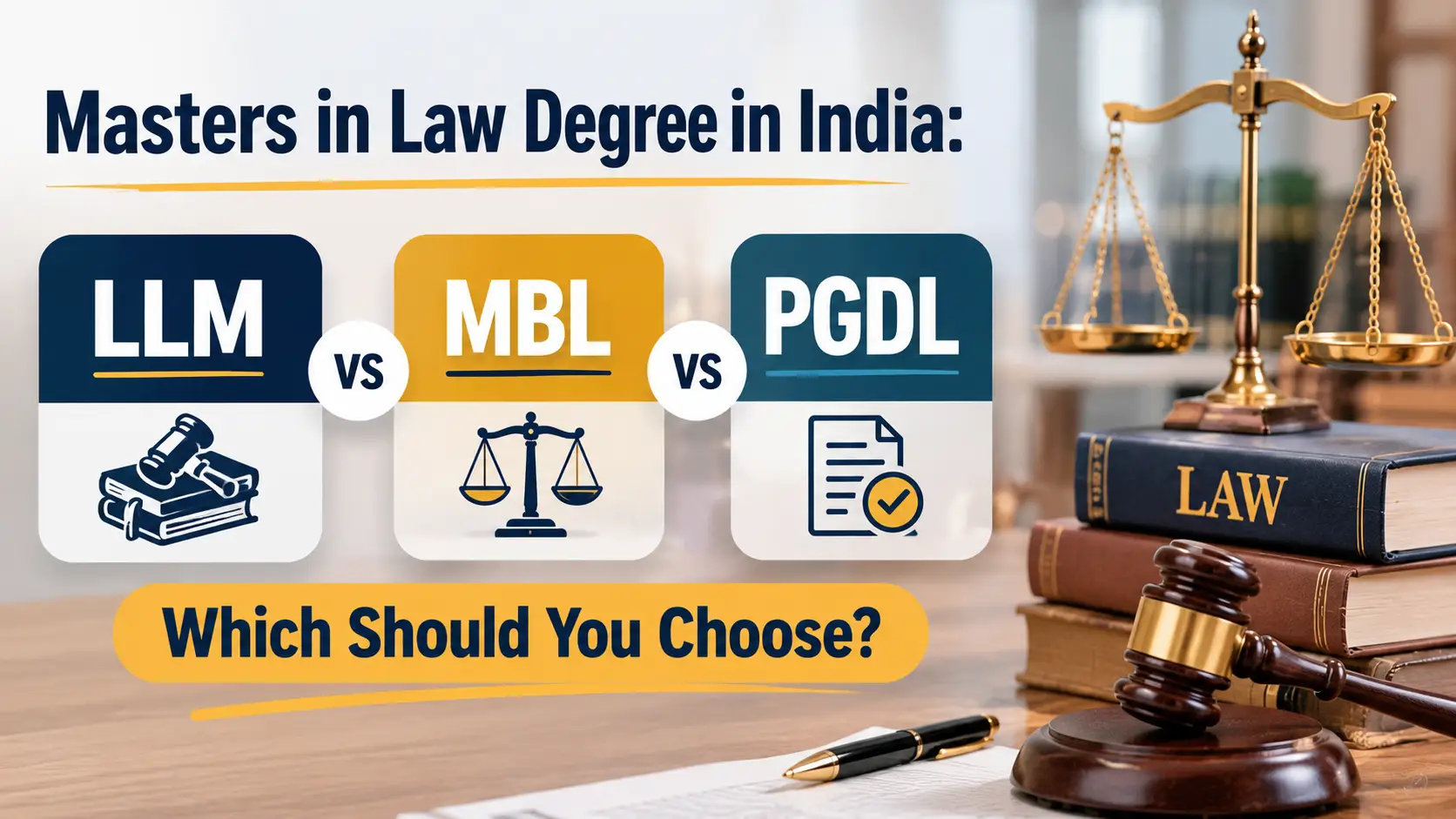
Masters in Law Degree in India: LLM vs MBL vs PGDL — Which Should You Choose?
If you have a law degree (or are about to graduate) and want to pursue…

BA LLB vs LLB vs LLM: Understanding the Differences & Career Opportunities
When students complete their schooling and decide to pursue a career in law, they face…

How Are Courts Tackling Corporate Fraud in the Modern Era?
TABLE OF CONTENTS Introduction What Types of Corporate Fraud Are Courts Handling Today? How Are…
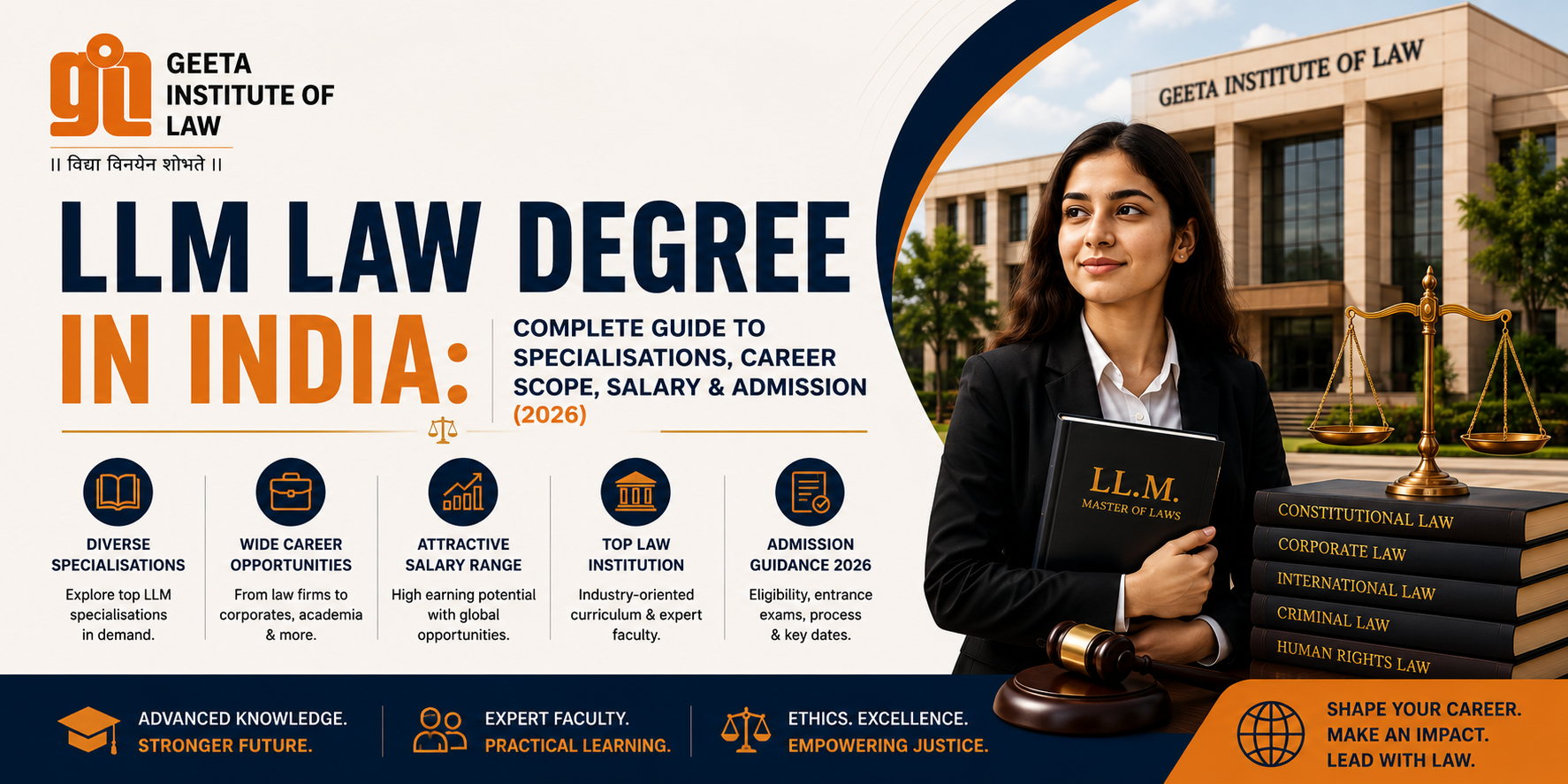
LLM Law Degree in India: Complete Guide to Specialisations, Career Scope, Salary & Admission (2026)
Everything law graduates need to know before pursuing a Master of Laws — and how…

The Rise Of LLMs (Master of Law) In India: The Transformation Of Legal Practice To Reshape The Future
In recent times, the Masters of Law has gained popularity in recent times due to…