What is Human Rights & International Humanitarian Law (HRIHL)?
Home / LAW / What is Human Rights & International Humanitarian Law (HRIHL)?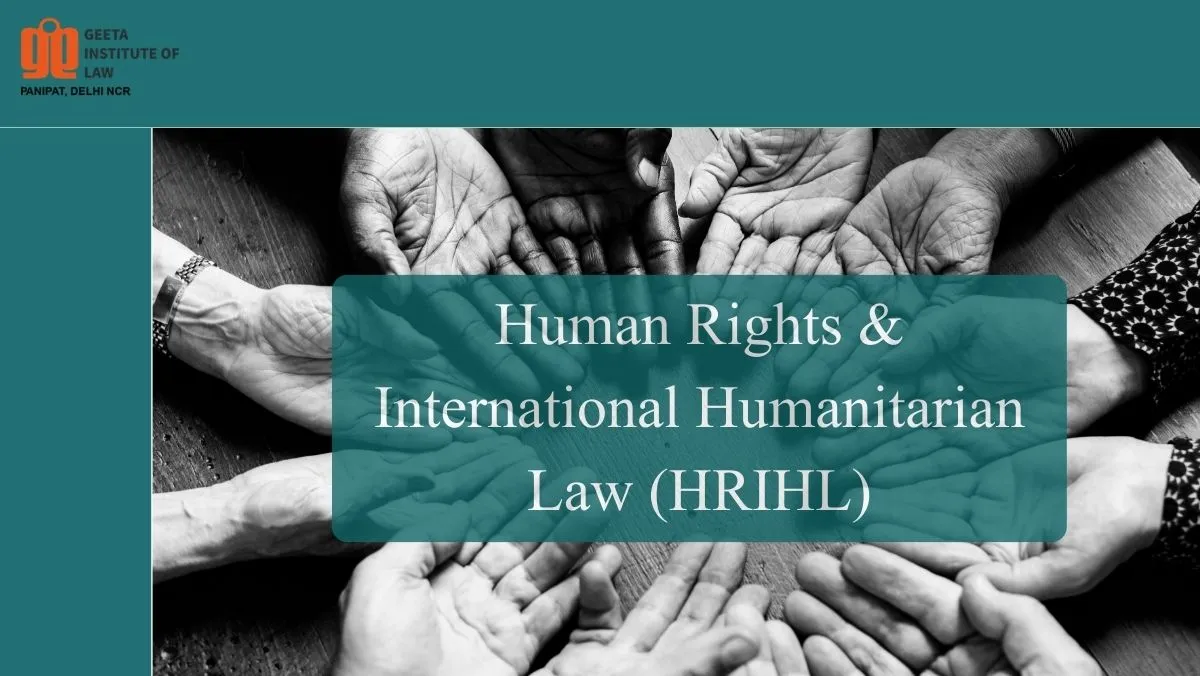
Human Rights & International Humanitarian Law is a significant area of law that safeguards human rights, freedoms, and justice worldwide. Students in this law specialisation learn about international agreements, policies, and laws that protect people in times of peace and war.
People are becoming more interested in this area of Human Rights and International Humanitarian Law as they learn more about global humanitarian problems, social justice, and international relations. There are now many specialised programs, such as LLB and LLM, as well as certificate programs that help students prepare for jobs in NGOs and international organisations.
What is Human Rights & International Humanitarian Law?
The Human Rights and International Humanitarian Law covers the laws that safeguard people’s safety, freedom, and dignity worldwide. Human Rights Law ensures that everyone has essential rights, including the right to be treated equally, to be free from discrimination, and to access justice.
These rights are always in effect, whether there is peace or war, and are enforced by constitutions and global legal structures. Top law colleges in India and several in other nations now offer specialised programs that teach students about the legal systems worldwide that defend human rights.
Difference Between Human Rights Law & International Humanitarian Law
Both areas of law aim to protect people’s dignity, but they do so in slightly different contexts. In times of peace, crisis, and war, Human Rights Law applies. On the other hand, Humanitarian Law only applies during armed conflict.
| Basis | Human Rights Law | International Humanitarian Law |
| Application | Applies at all times | Applies only during war or armed conflict |
| Main Objective | Protect fundamental rights and freedoms | Protect civilians and limit suffering in war |
| Key Legal Framework | International treaties and constitutions | Geneva Conventions and Additional Protocols |
| Focus | Rights like freedom, equality, justice | Rules of warfare and protection of non-combatants |
Human Rights and International Humanitarian Law Course Highlights
The Human Rights & International Humanitarian Law in India is for those who want to work for social justice, uphold International Law, and help others. You may get any of the law courses after 12th, legal degrees, postgraduate programs, and certificate courses from top law colleges in India and abroad in this specialisation.
Students in this discipline learn about topics such as international law, humanitarian intervention, and methods for protecting human rights. The course also teaches students about the roles of governments, courts, and international organisations in maintaining peace and justice, helping them build a strong career in Human Rights Law.
Course Duration and Degree Types (LLB / LLM / Diploma)
Depending on the level of study, the Human Rights and International Humanitarian Law course is offered at the undergraduate and postgraduate levels.
- BA LLB /BBA LLB– 5 Years-Combines humanities subjects and Law studies
- LLB-3 Years-Basic Law degree after graduation
- LLM in Human Rights Law-1–2 Years-Advanced specialisation in Human Rights Law
- Diploma- 6 Months or 1 Year short-term specialised courses
Read More: BA LLB vs LLB vs LLM: Understanding the Differences & Career Opportunities
Eligibility Criteria for Human Rights & International Humanitarian Law
A student’s ability to take a Human Rights and International Humanitarian Law course is conditional on the major they declare. Higher secondary education is often required for undergraduate programs, whereas a law degree is required for graduate institutes.
Basic Eligibility Requirements
The basic eligibility to enrol in top law colleges in India is:
For BA LLB
- Requires completion of the 10+2 examination from an approved board
- Different institutes have different minimum percentage requirements.
For LLB (3-Year Course)
- A bachelor’s degree in a field of study
- Minimum passing score as set by the institution
For LLM in Human Rights Law
- Must have completed an LLB 3 year course
- Some institutions may require entrance exam scores before admission.
These academic requirements explain the eligibility for the Human Rights Law course for students interested in this field.
Admission Process for Human Rights and International Humanitarian Law
There are two main methods to get into the International Humanitarian course entrance examination or direct admission.
Entrance-Based vs Direct Admission
Entrance-Based Admission
Many of the top law colleges in India admit students based on national-level admission tests. These tests check your basic knowledge, critical thinking skills, and legal knowledge.
Direct Admission
Some top-ranked law colleges in India admit applicants based on how well they performed in their earlier classes.
Admission Process Steps
- Fill the application form
- Take admission tests
- Take part in the interview or counselling
- Verification of all documents and admission
Entrance Exams for Human Rights & International Humanitarian Law
India has several law entrance exams that help students gain admission to the best law colleges.
Here are some famous tests:
| Exam | Conducting Body | Accepted By |
| CLAT | Consortium of NLUs | National Law Universities (NLUs) |
| AILET | NLU Delhi | National Law University Delhi |
| LSAT India | LSAC | Many Private Law Colleges |
Also Read: Step-by-Step Guide to Prepare for CLAT 2027
Top Law Colleges in India for Human Rights and International Humanitarian Law
In India, many well-known institutions offer courses in Human Rights & International Humanitarian Law.
Government Colleges
Here are some of the best institutes for government law:
- National Law School of India University
- National Law University Delhi
- NALSAR University of Law
Private Colleges
Leading private law institutions include:
- Geeta Institute of Law
- Jindal Global Law School
- Symbiosis Law School
Human Rights & International Humanitarian Law Syllabus
The International Humanitarian Law Course covers topics related to global justice and humanitarian protection.
The main subjects are:
- International Human Rights Law
- Law for Refugees
- International Humanitarian Law / Law of Armed Conflict
- War Crimes and Genocide Law
- Global Systems of Justice
- International Criminal Law
Students can build strong careers after graduating from top law colleges in India, like Geeta Institute of Law, by completing internships, gaining legal training, and working in the real world. These roles create several Humanitarian Law career opportunities for law graduates.
Career Scope in Human Rights and International Humanitarian Law
Human Rights and International Humanitarian Law is one of the best law specialisations that can lead to jobs in law firms, government organisations, non-governmental organisations (NGOs), and international institutions. Professionals may work for international organisations such as the International Committee of the Red Cross (ICRC).
Below are other popular job options in Human Rights and International Humanitarian Law:
- Human Rights Lawyer in India
- Expert in International Law
- International Law Consultant
- NGO Legal Advisor
- Policy Analyst
- Legal Researcher
Average Salary in Human Rights and International Humanitarian Law
Pay in this industry varies by experience, organisation, and area of specialisation.
| Job Role | Average Salary (India) |
| NGO Legal Advisor | ₹3 – ₹6 LPA |
| Human Rights Lawyer | ₹4 – ₹10 LPA |
| Policy Analyst | ₹6 – ₹12 LPA |
| International Law Consultant | ₹8 – ₹20 LPA |
People who work for international organisations or global NGOs often find better opportunities abroad.
Conclusion
The study of Human Rights and International Humanitarian Law is an important area of law. Its main goals are to protect people from unfair treatment, promote equality, and ensure humane standards are met during armed conflicts.
Students can learn a great deal about law and secure jobs in social justice, International Law, and aid organisations by taking a Human Rights and International Humanitarian Law course from the top law colleges in India.
Frequently Asked Questions
Human Rights and International Humanitarian Law is the study of the Laws that protect people's rights and govern behaviour during armed conflict.
You could work as a human rights lawyer, a legal adviser, a policy expert, or an NGO counsellor.
Yes, it gives you the chance to specialise further and open up new doors in international Law and aid organisations.
International criminal Law, human rights law, humanitarian law, and refugee law are some of the topics covered.
Grads can work for organisations such as the UN, NGOs, and global aid agencies.
Human Rights and International Humanitarian Law courses are offered by some of top law colleges in India, including: Geeta Institute of Law, Panipat, National Law School of India University (NLSIU), The Jindal Global Law School in Sonipat, Symbiosis Law School, Pune and National Law University (NLU), Delhi.
Related Blogs

What is Civil Law in India? Courses, Admission Process, Best Colleges & Career Scope
Among the most well-liked areas of law is Civil Law, which helps resolve various non-criminal…
How to Fund Your Law Degree in India: Loans, Government Schemes & Scholarships
Funding the whole degree with an education loan for law students in India is easy…

Challenges and Rewards of Being a Supreme Court Lawyer in India
Practicing as a Supreme Court lawyer is a very prestigious and demanding job in recent…
AIBE Complete Guide: Certificate of Practice & Rechecking Process Explained
The All India Bar Examination (AIBE) is a compulsory stage for law graduates to practice…

What To Do Immediately After CBSE 12th Result 2026?
The Central Board of Secondary Education (CBSE) announces the results of Class 12th every year,…

Which Private Law College Has Best Placement?
Private law colleges have emerged as a preferred option for students looking for placement prospects…