
Law Courses After 12th: Complete Roadmap for Students
Home / LAW / Law Courses After 12th: Complete Roadmap for Students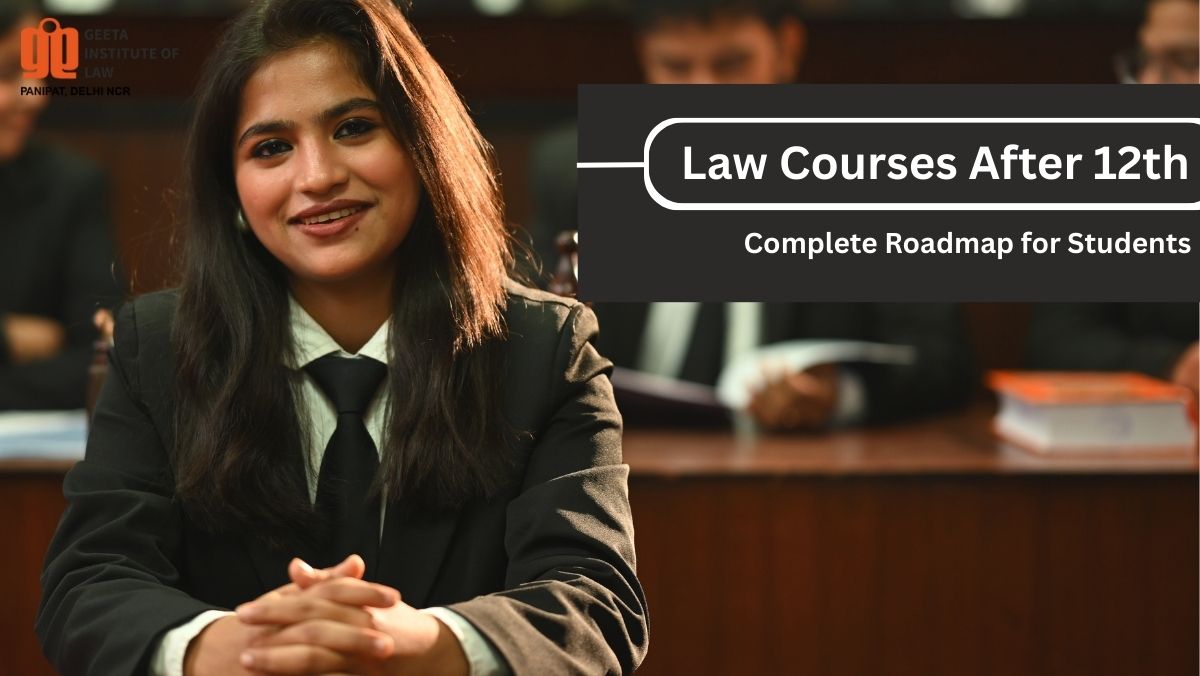
If you like leadership, choosing law as a profession after 12th grade is one of the best things you can do. Is Law a Good Career in India? Law doesn’t only mean being a lawyer; it also leads to highly respected professions in business, the court, public service, academia, and many other fields.
Law courses after 12th grade are meant to assist students in getting a head start on their legal studies. Students may register in integrated legal programs right after Class 12.
Important points:
- Great for students of all streams (arts, commerce, and science)
- Offers a lot of useful and academic legal training
Why Choose Law as a Career After 12th?
Law is a recognised field of work that gives you a lot of professional experience. After 12th grade, students who want to study law can look into a variety of job routes in the legal field, business, the courts, and government services.
Advantages of choosing law after 12th grade:
- There is a lot of need for lawyers.
- Many job choices (business, litigation, the courts, the government)
- Chance to work in India and other countries
- With experience, revenue grows quickly.
- Builds leadership, communication, and critical thinking skills
Types of Law Courses After 12th
After Class 12, students can pick from different types of law classes based on their stream they chose. The goal of these classes is to teach both theoretical and real law skills.
- 5-Year Integrated Law Courses:-
There are several integrated law courses available after the 12th that allow students to pursue a law degree alongside an undergraduate qualification in a single program.
Popular integrated law courses include BBA LL.B, which focuses on business administration and legal studies; BA LL.B, which blends law with arts subjects; BCom LL.B, combining commerce, finance, and law; and BSc LL.B, which integrates scientific knowledge with legal training.
Apart from the integrated courses, LLB 3-year course in law is one of the graduation course that helps students to grow in legal profession.
- Law Courses after 12th with a Diploma or a Certificate:-
For example:
- A degree in cyber law
- Level 1 in labour law
- Certificate in the Rights to Intellectual Property
Also Read: What Is the Difference Between BA LLB and BA LLB (Hons)?
Eligibility Criteria for Law Admission 2026
Before they can apply for law classes, students must meet the standards set by colleges and regulatory groups. These requirements make sure that students are ready academically for law admission 2026.
- Passed 10+2 from a well-known board
Minimum marks: - 45% in the general category
- 40% for OBC, SC, and ST
Most private law colleges don’t have an age cap in their admission process for law courses after 12th.
Law Admission 2026: Entrance Exams You Must Know
In 2026, there will be national, state, and university-level tests that can be used to get into law colleges. Some private colleges let people in based on their academic performance.
- CLAT:-
- Test to Get into Common Law
- For Universities of National Law (NLUs)
- Very competitive
- AILET:-
- The NLU in Delhi
- Separate test to get in
- Entrance Exams, including CUET and others, at the State and University Levels.
There are a lot of well-known private law colleges that give direct entrance or entry based on marks obtained, and provide multiple law courses after 12th.
Law Admission Process 2026: Step-by-Step Guide
Knowing how to get into a college helps students escape confusion and make plans for a smooth trip. The method for getting in step by step:
- Choose the proper legal class
- Check the requirements for eligibility
- If you need to, apply for the admission test.
- Come to counselling or a college interview
- Checking documents
- Payment of fees and final entrance
Geeta Institute of Law helps students with the law admission 2026.
Subjects & Syllabus in Law Courses After 12th
The goal of the law curriculum is to give students both academic and hands-on experience with the legal system. Subjects taught in common law:
- Law of the Constitution
- Law of Crime
- Law of Contracts
- Law for Families
- Law for Companies
- Law about the environment
- Writing and Research in the Law
Career Options After Completing Law Courses
After choosing one of the law courses after 12th, students can pick from many different types of jobs based on their streams. Students can go in a number of different job directions after finishing law college:
- Lawyer or advocate
- Lawyer for Businesses
- Services for Judges and Lawyers
- Legal Helper
- Secretary of the company (with CS)
- Legal Officer in the Public Sector
- Professor or Lawyer-Researcher
Salary & Job Scope After Law Courses
Average pay after taking law classes:
- 3 to 6 LPA for new graduates
- ₹6–12 LPA for business lawyers
- Experts with a lot of experience: ₹15+ LPA
Choosing the Right Course: Arts vs Commerce vs Science
There are various law courses after 12th, but choosing one of them gets tough. Overcoming stress is some suggestions based on the current stream you are using:
- If you’re in the Arts or Humanities BA-LLB (Hons) generally runs more smoothly due to the fact that you are already comfortable with the social sciences. It is possible to do BBA-LLB, however, you may have to learn about basic finance concepts, business law and so on.
- If you’re from Commerce, BBA-LLB and B.Com-LLB (if there is one available) are good options as you are already exposed to accounting and economics and other areas. This can be leveraged in banking law, corporate law, laws, taxation, etc.
If you’re from Science, particularly if you are interested in technology or IP law, the environment, or cybersecurity law, then you can select BA-LLB or the BBA-LLB program with a focus on science, or consider enrolment in B.Sc-LLB in the event that it is available.
Conclusion
Law courses after 12th are a great field to study if you want to be respected, grow, and have a lot of different job possibilities. Students can have a great legal job if they get the right help and go to a reputable college like Geeta Institute of Law.
Frequently Asked Questions
The most significant tests include the CLAT 2026 and the AILET 2026 and several college or state-level admission examinations.
Students must have scored minimum 45% marks on the 10+2 test and 40percent in their OBC/SC/ST test. The majority of private law colleges do not require a minimum age.
Yes, the law provides employment security, stability, appreciation, decent pay as well as a variety of work opportunities for workers in India as well as other nations.
Only National Law Universities (NLUs) require CLAT. Many private colleges like Geeta Institute of Law offers merit-based admission.
Related Blogs
Top Law Colleges in India 2026: NLUs, Government & Private
Getting into one of the top law institutions in India in 2026 is your stepping…
AIBE Syllabus: Subject-wise Breakdown, Exam Pattern & Registration Guide
The AIBE XXI exam date 2026 is June 7, 2026, conducted by the Bar Council…

The Evolution of Legal Education: How Blockchain and Cyber Law Are Entering LLB Colleges in Delhi
Introduction to Emerging Legal Technologies Law-tech, also referred to as emerging legal technologies, evolves the…

Your Wait is Over! HBSE 12th Result 2026 Released
The Board of School Education Haryana (BSEH) has officially released the HBSE 12th Result 2026…
Sports Law in India: Courses, Colleges, & Career Scope
This paper discusses how sports law has evolved in the growing sports industry in India,…
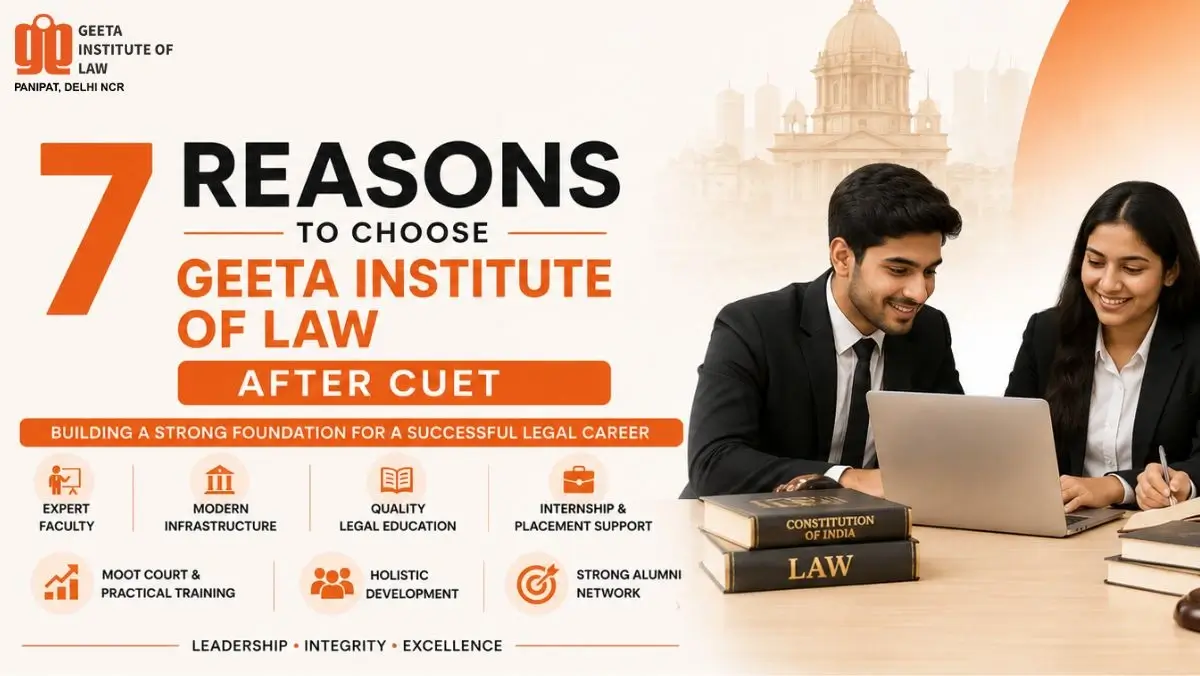
7 Reasons to Choose Geeta Institute of Law After CUET
Choose Geeta Institute of Law after CUET because it is one of the top private…
Leave a comment