
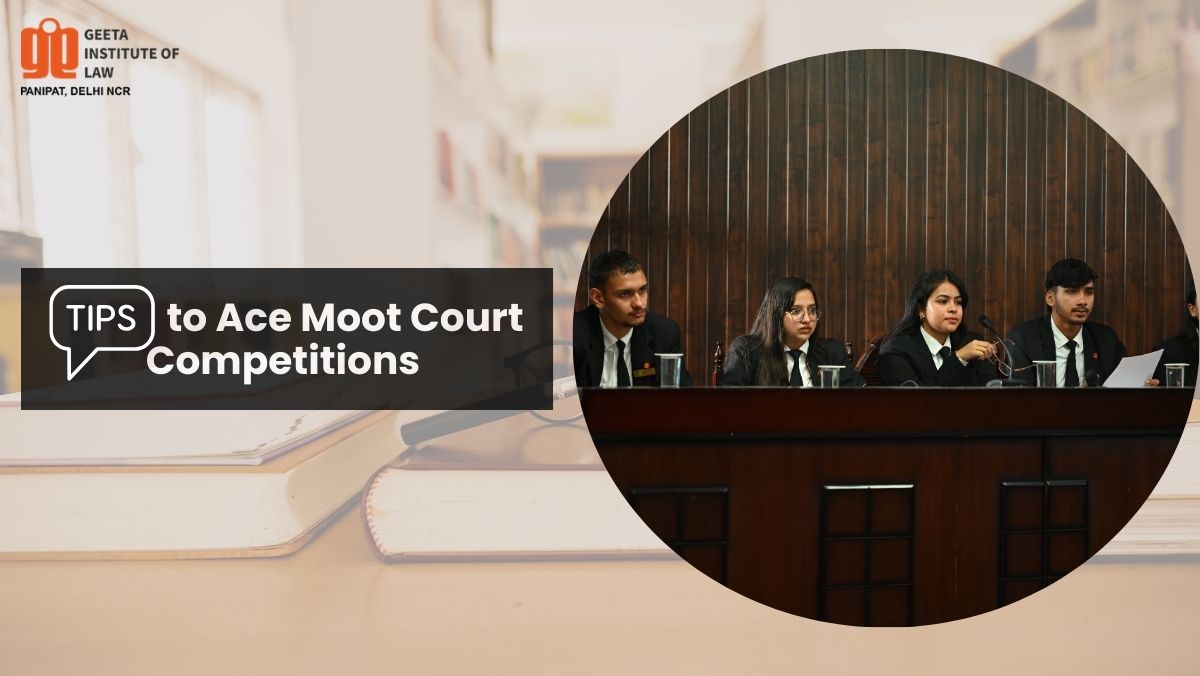
Moot courts are not simply academic activities. These are the simulation to a real courtroom practice that a law student can have when in college. Law students need to understand the importance of moot court participation to polish their skills in research and presentation through organized arguments, drafting of laws, and questioning by the judges.
If you are looking for practical tips to ace moot court competitions, remember it is not only to win trophies but to establish courtroom confidence. These tips guide discipline, preparation, and clarity of thought, which are the keys to a good career in law.
Moot Court Competitions and Their Importance
Moot court training is the exact simulation of a court. Students create memorials, speak before judges, answer questions, and argue on the other side of the case. Academicians, advocates, and occasionally sitting or retired judges join these competitions.
Why are they important?
First, they enhance the advocacies of law students. Delivering a speech in front of a panel is a confidence-building experience. Second, moots are for in-depth research as the participants are expected to interpret statutes, precedents, and principles of the Constitution. Third, they enhance the skills of drafting since writing memoirs requires organising skills and accuracy.
Many best private law colleges have introduced formal moot court training to make the students courtroom-prepared by the time they graduate. One that focuses on practical exposure produces graduates who are assertive and express themselves immediately.
Tips to Ace Moot Court Competitions
Confidence is not the only factor that determines success in moot courts. It involves preparation, collaboration, a research plan, and courtroom decorum.
Below is a step-by-step, structured list of tips to ace moot court competitions; you will find how to prepare effectively to participate in a moot court:
1. Start with a Thorough Understanding of the Proposition
Learn the factual matrix before studying case laws and always state legal issues or problems infront the bench. Divide the problem into parts, including jurisdiction, maintainability, and substantive arguments. Most moot court competition tips are unsuccessful as the students dive into research without having clarity on the issues.
2. Master Legal Research Techniques
Good mooters do not collect random cases. They choose authorities strategically. Use online databases efficiently and rely on landmark judgments. Research must support your argument logically. Students must read landmark judgments of the Supreme Court of India. Structured research is one of the most essential tips to ace moot court competitions shared by experienced faculty members.
3. Draft a Strong Memorial
A memorial is your written argument. It reflects your analytical ability. Keep language precise, avoid unnecessary repetition, and cite authorities correctly. Judges often form their first impression through the memorial. Clear structure, persuasive writing, and proper formatting make a significant difference.
4. Anticipate Questions from Judges
Judges test clarity and composure. Prepare counter-arguments in advance. Practice answering difficult questions without losing focus. One of the most practical tips to ace moot court competitions is to conduct internal mock questioning sessions before the final round.
5. Practice Courtroom Etiquette
You have to address judges properly and maintain respectful body language. Plus, always speak calmly and avoid interrupting the bench. Even strong arguments lose impact if the presentation lacks professionalism.
6. Focus on Time Management
Each speaker is given a limited time. Establish the number of minutes you will spend on each of the issues. Work within rigid schedules.
Tip: One of the most underestimated tips to ace moot court competitions is time allocation, but it usually decides who wins.
7. Build Team Coordination
Mooting is a team effort. Researchers and speakers must coordinate arguments to avoid contradictions. Conduct rehearsals together and discuss strategy openly. Clear communication and coordination in your team strengthen overall performance.
8. Work on Voice Modulation and Confidence
Argument delivery matters, so always speak clearly. Avoid reading directly from notes and try to maintain eye contact. It is not about memorisation but preparation that brings confidence. Repetitive drills develop inherent courtroom presence.
Things to Take Care Of!
Although preparation is critical, some of the most common errors should be prevented.
- Do not be dependent on memorised scripts. Judges like comprehending as opposed to memorizing.
- Use non-aggressive responses to questions.
- Never misquote case laws. Accuracy is crucial.
- Be professional and adhere to the rules of competition.
- Respect deadlines for memorial submission.
Remember, judges assess clarity of issues, strength of authorities, response to questions, structure of arguments, and overall advocacy skills for law students. To win, one needs to be consistent in all these parameters.
Students from institutions like Geeta Institute of Law are trained to balance research depth with courtroom composure. Structured mentoring and regular practice rounds prepare them for national moot court competitions.
Read More: How Law Schools Are Preparing Students for the Digital Revolution
How Students Build Confidence Through Mooting?
Consistent engagement in moot court practice sessions enables students to understand courtroom strategy deeply. Mooting also improves quick thinking. Judges may challenge your strongest point. Your ability to respond logically shows maturity. Repeated practice enhances mental agility and structured reasoning.
- First, internal moots assist students in dealing with stage fright.
- Second, inter-college contests open up the world.
- Third, judicial feedback enhances performance.
In addition, mooting is a discipline. Turning in memorials on schedule, working with teammates, and being a professional make some habits that will be beneficial in litigation and corporate life.
Also Read: How Law Education Builds Confidence, Ethics & Critical Thinking
Conclusion
Moot court competitions are effective training opportunities for future lawyers. They develop research skills, hone drafting skills, and enhance court presence. The tips to ace moot court competitions can make your performance rise to an excellent one.
Success is based on preparation, teamwork, clarity, and confidence. Community institutions with a focus on real-world exposure prepare students prior to launching a professional career with a real advocacy experience. It is about turning into a convincing, moral, and self-assured law professional who is prepared to work in the actual courtrooms.
Frequently Asked Questions
The beginners must learn the moot proposition and internal rounds first. Formal study and role-playing activities assist in developing early confidence.
Judges examine coherence of law matters, the application, drafting of memoirs, question answering and courtroom decorum. There is also the importance of confidence and logicality.
No particular number exists, but frequent attendance enhances performance considerably. Regular exposure also enables the students to perfect their arguments and gain confidence in courtrooms with time.
Be calm, pay close attention to what they are asking, and react sensibly. If you're not sure, answer the question, make a well-reasoned assumption, and then return to your main points, but remember not to bluff.
Yes, first-year students can participate in moot court. Early involvement aids in the development of advocacy abilities from the beginning of your legal school.
Related Blogs

The Impact of Recent Legal Reforms: What Future Lawyers Need to Know
India’s old legal system is undergoing a significant change. Over the years, a number of…

Regulating AI in India: Do Existing Laws Suffice?
Introduction Artificial intelligence is no longer a future concept. It is already shaping how we…

How to Build a Strong Legal Resume While Still in Law School
Even brilliant students undergo professional anxiety when making a resume when they are asked to define…

Law programs: Where deep legal knowledge meets real-world advocacy
Law programs in India are provided as a wide-ranging course that ranges between 3 years…

Top 10 Law Colleges in Haryana for 2026: Admission, Courses, and Career Prospects
Every year, we meet students who are top 10 law colleges in haryanaexcited about studying…
Law Colleges in Delhi NCR: Which Is Best for Law Students?
With diverse law courses, strong academic infrastructure, internships, scholarships, and hands-on practical training, law institutes…